Potato, Potato: On the Latest Dispute Between Order and Chaos
-- Han Bo
Fairy tales recount miracles, helping mortals realize impossible desires—especially in times when reality grows unforgiving. There are, in truth, no miracles in the world. Yet when ordinary people tell fairy tales again and again, miracles begin to take shape. Miracles emerge from human imagination, and even more from human resolve—the resolve to negate reality itself.
Han Bo’s 2026 solo exhibition Shanghai Fairy Tales begins precisely from this premise.
Above all, it is a tribute to the mortal body that fabricates miracles: to its fragility, slowness, and forgetfulness—particularly at a historical moment when the technological authoritarianism represented by artificial intelligence delights in exhibiting its supposed immortality, omniscience, and lightning-fast capacity to appropriate everything in its path.
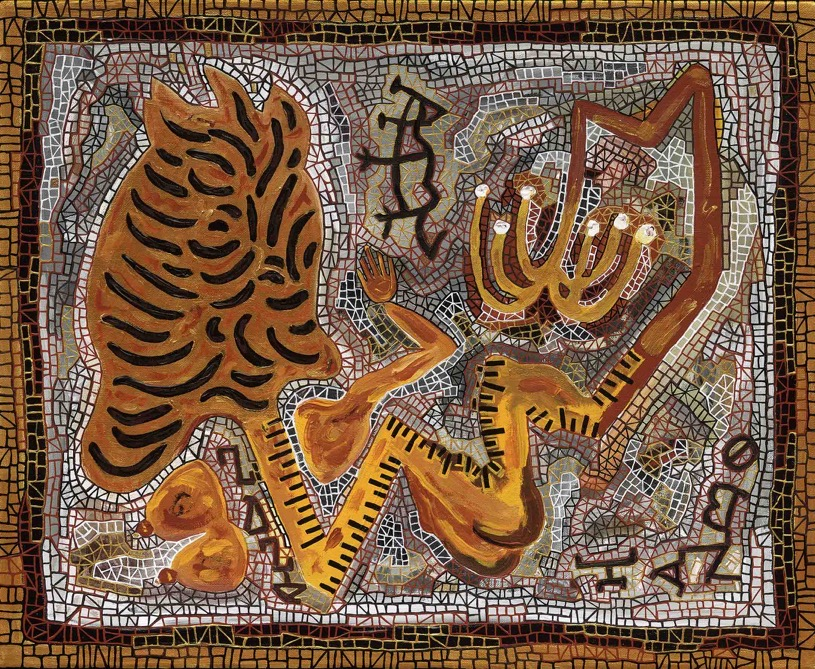
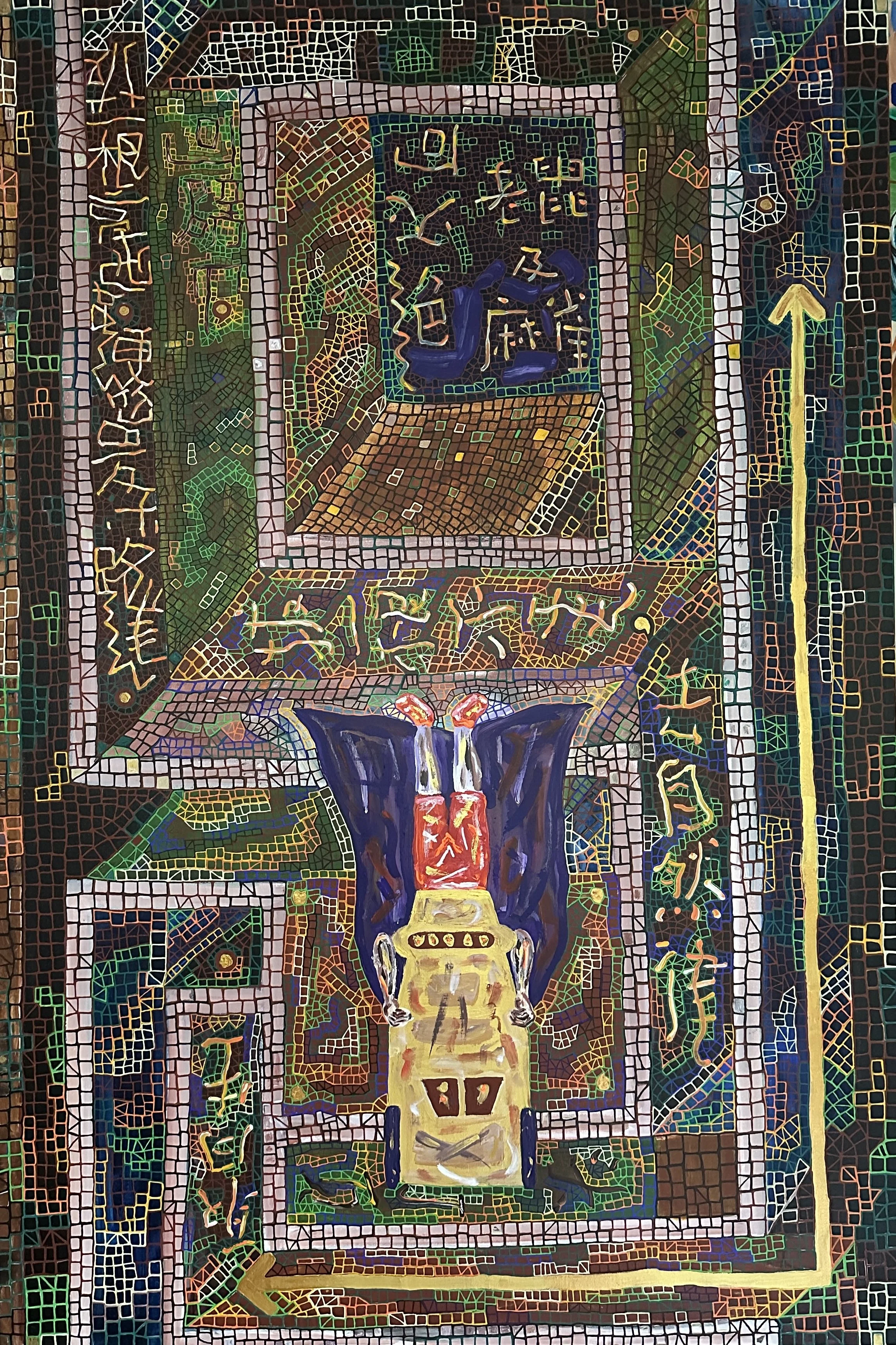
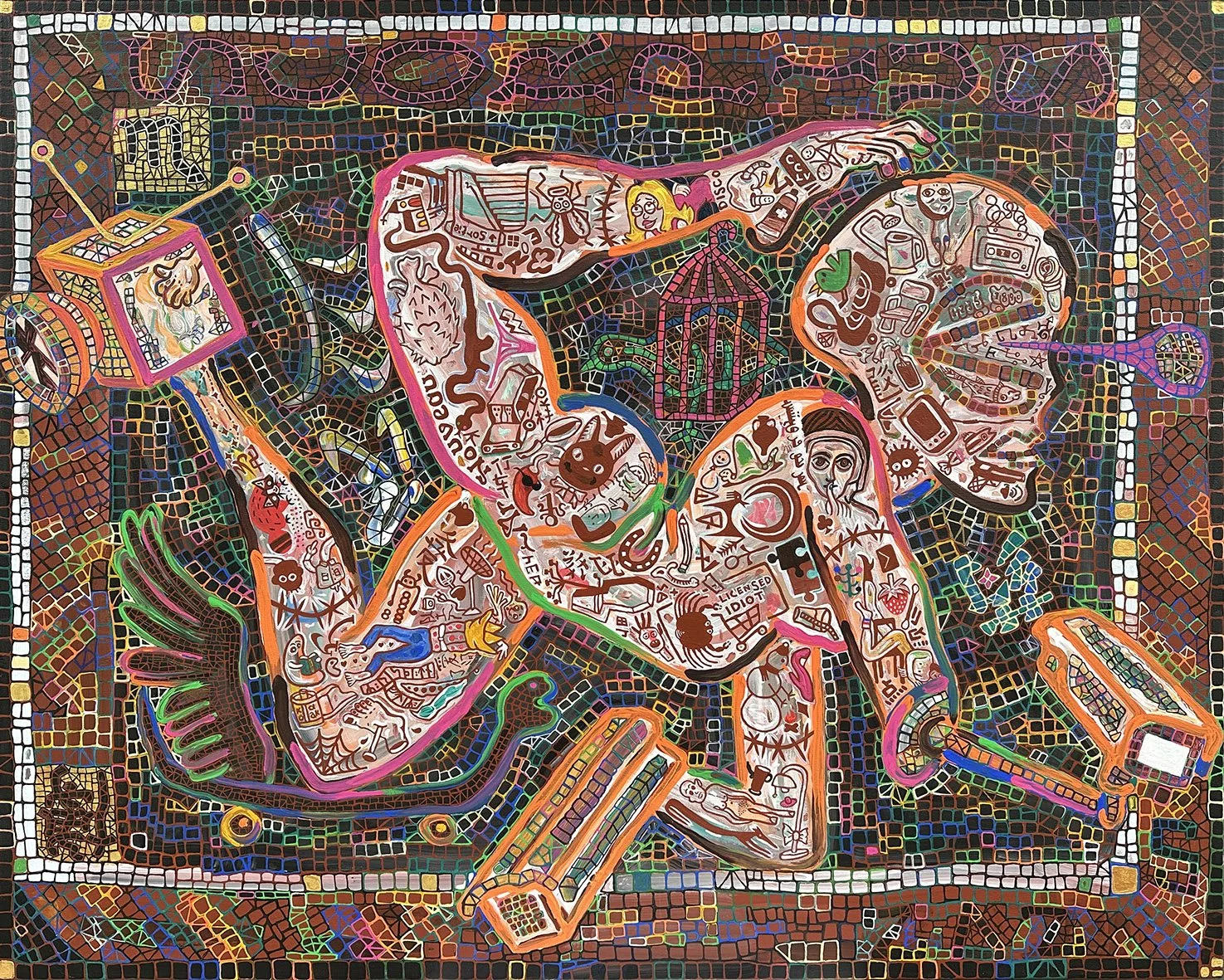
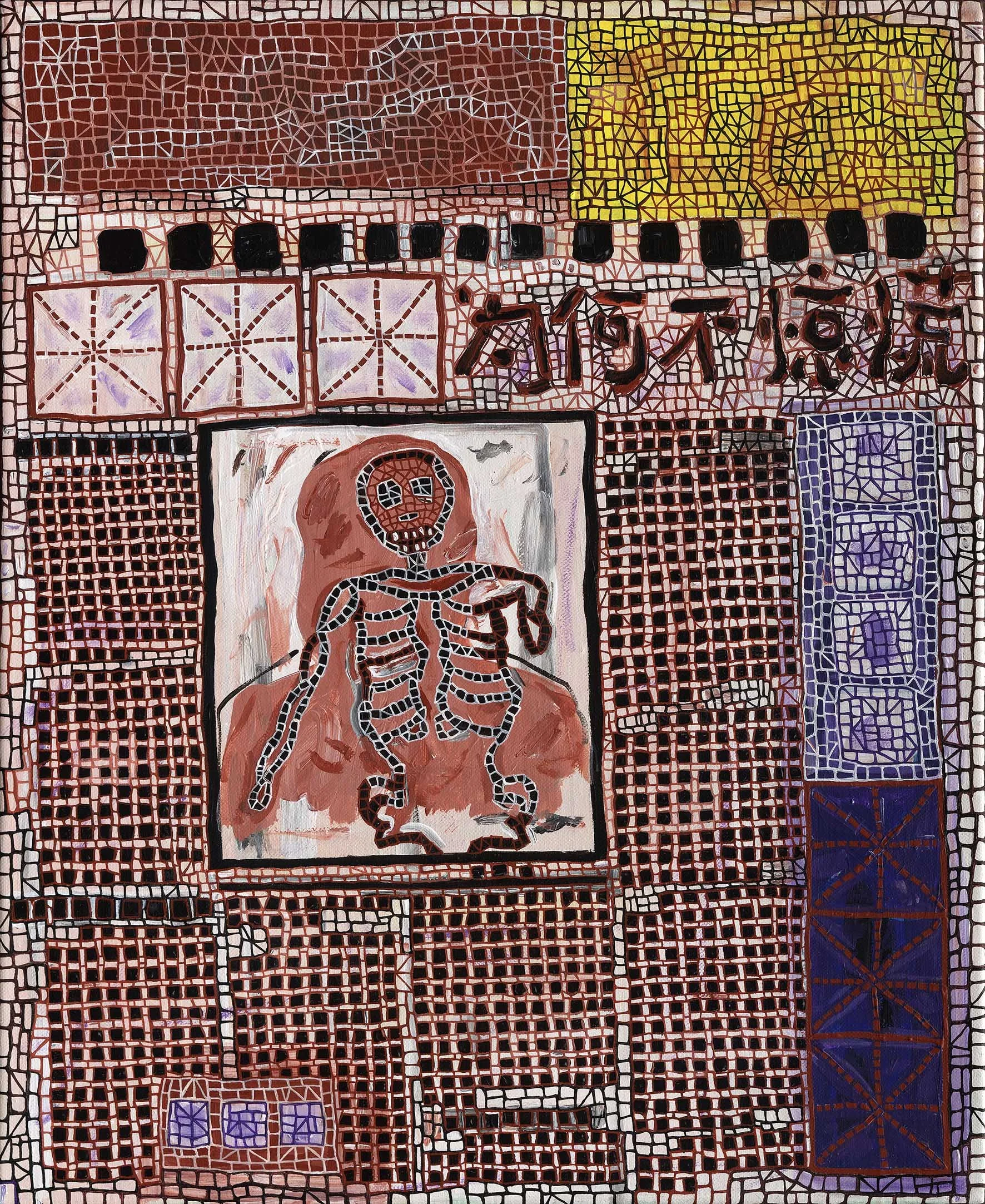
For this reason, the works in Shanghai Fairy Tales are entirely unplugged. The exhibition relies solely upon humanity’s most primitive, elementary, and awkward instruments of expression: painting and text. The painting series Myths of the Twenties, When the Stars of Humanity Grow Dim, Nocturne in Simplified Chinese, Shanghai Wall, Ladder and Passage, and Look, This Inhuman Creature!, together with the textual works—or works that ought to have been texts—Shanghai Fairy Tales, The Chinese Eastern Railway, and From the Persian Gulf to the Atlantic, converge into a distinctly Wittgensteinian condition: the search for the most difficult solutions to the most immediate and intimate problems.
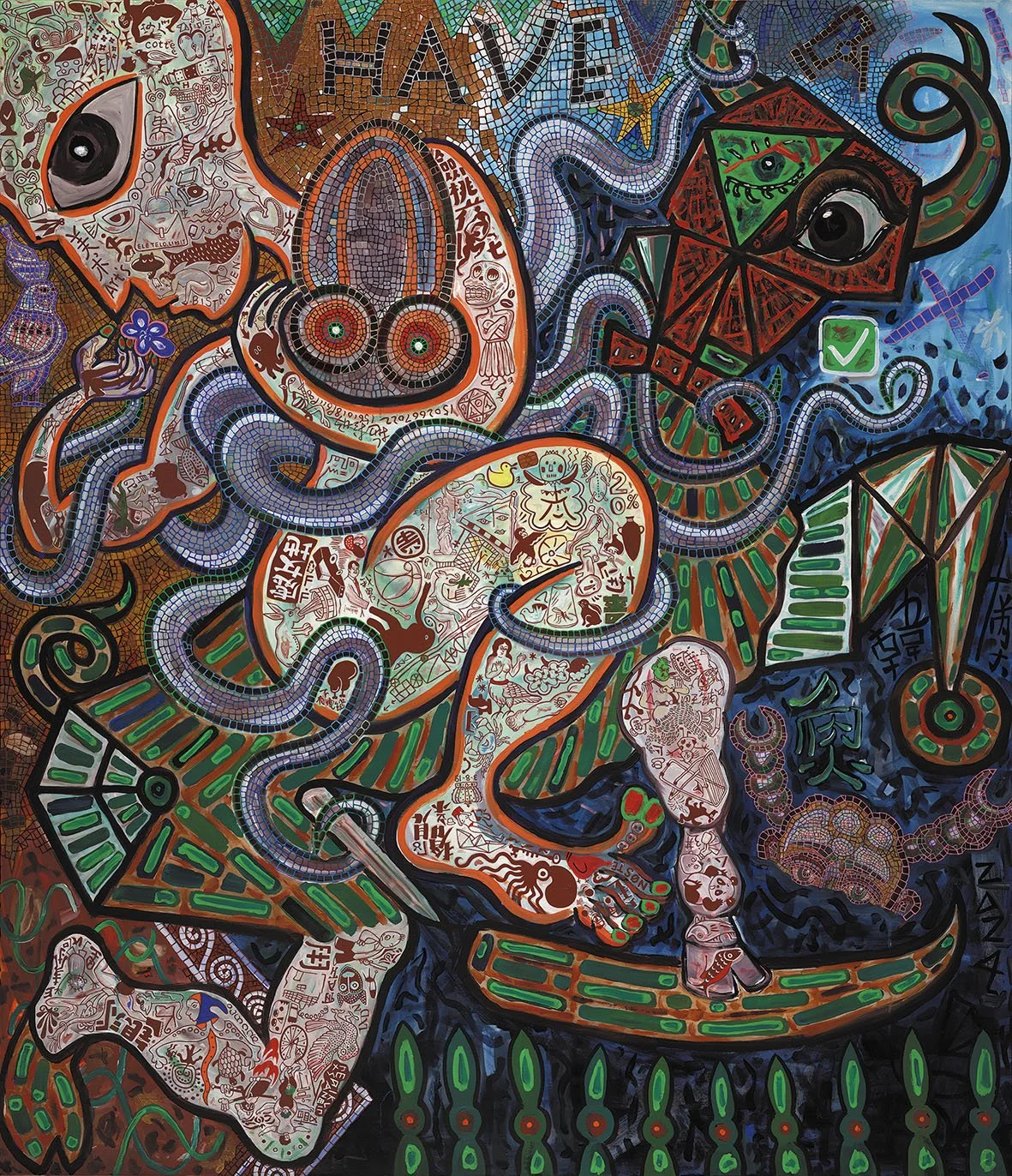
Since the beginning of the twenties, I have been slowly fabricating mosaics upon linen, treating them as “pixels” with which to reconstruct an epic no longer possible. Epics narrate myth, and myth arises from the collective imagination of generations. Myth never denies reality; rather, it is a poetic historiography of reality, governed by its own democratic principle, much like Athens at the height of the polis—for Homer was never merely one individual. Fairy tales are different. They are created by individuals. Each stands alone. To reconstruct epic through the fragile form of the fairy tale is therefore like a dragonfly attempting to shake a pillar, or climbing a tree in search of fish: a form of “self-exploitation” destined to produce no measurable “performance.” And yet, is not the attempt to reconstruct the impossible itself akin to Diogenes of Sinope rolling his barrel—especially at a moment when reality disciplines everyone into performing Sisyphus, endlessly pushing the stone uphill?
I have always taken this imitation of barrel-rolling seriously. I borrow fragments of myth on interest-free credit: Zeus abducting Europa; Dionysus returning to Thebes after his wanderings; Aphrodite and Eros fleeing separately for their lives—eternal archetypes of human tragicomedy, forever effective. I pour them into the vessel of life in the twenties, decanting old wine into new bottles, only to watch the bottle split and the wine spill out.
Encircled by mosaics masquerading as truth—by deceptive figuration concealed within abstraction, like the visions perceived through placebo effects within spiritual scams, or the so-called “awakenings” promised by “energy healing”—one seems to discern human and beastly forms. Motifs casually harvested from tombs, streets, temples, or screens become the “tattoos” of these “humans” and “beasts,” binding themselves into absurd and mutually resistant intertextualities. In this way, they constitute a rebuttal to the Neoplatonic conception of vision inherited from the Renaissance, which held that complex meanings and profound truths might be apprehended through simple forms, and that a single image could generate endless reflection, each visual detail becoming a stairway toward higher spiritual revelation.
Shanghai Fairy Tales stands only upon the threshold of the individual—the individual who has been ceaselessly denied for thousands of years—and recounts impossible things witnessed firsthand: the latest dispute between order and chaos, especially at a moment when the sublime impulse to establish a new order mass-produces abysses darker and more catastrophic than chaos itself.