We Are Dust And Shadows
-- Filippo Mollea Ceirano
The double solo exhibition is dedicated to the research of Linlu Zhang and Marco Abrate, artists who are of the same age but very different in terms of origins, training, types of works, techniques, and materials used. However, through their works they find a point of convergence in the way they approach highly delicate aspects of some of the most controversial and contradictory themes of the contemporary era, of society, and of culture: these are, in particular, aspects that play a central role in the meaning and dynamics of the most recent art. Both focus their attention on how processes related to perception, elaboration, imagination, and creativity develop. This issue, which has always been central and problematic in the field of art, must in recent times confront the novelties introduced by the latest technological developments, and specifically by communication technology and the virtual world.
In reading, and therefore also in presenting a two-person exhibition, it is possible to find very stimulating reflections starting from the analysis of what emerges in general from the comparison between the two poetics, and in particular from their common aspects on the one hand and their differences on the other. In this case, a first certainly relevant aspect is linked to the origin of the two artists: while Linlu Zhang was born and raised in China and later completed her education in the West, Marco Abrate is of purely Italian origin and training, although he too has long cultivated a strong interest in Eastern culture and history.
Each of the two moves by rooting their work in their own history. Abrate refers to the figurative language developed in Europe, which found its peak and turning point in the transition from the late Middle Ages to the Renaissance, and thus remains tied to the image-form, to the direct reference to a vision that refers back to reality, to its reproduction. Zhang, on the other hand, starts from the historical foundations of the writing of her land of origin, from the common ancestor later developed into its modern form expressed through ideograms; these are the evolution of pictograms, characters through which the sound and meaning of words were expressed by reproducing images synthesized through a few essential signs.
It is in the subsequent step that the paths of the two artists meet, finding common ground, namely in the way both choose to relate to the recipients of the communication contained in their works. They are not interested in a unidirectional relationship, in which the artists makes their work available to a viewer whose task (but also limitation) is to receive it, understand it, and absorb it. The objective is another: to trigger a dynamic that leads the viewer themselves to become directly involved, to react to the work both with an emotional effort and by carrying out, in a certain sense, a creative step. Here, however, an important clarification must be made: it is not about relying on a personal reaction in which the artist is bypassed by a “free vision” that detaches itself to give rise to a vaguely defined subjective interpretation, but rather about the search for an encounter, for a shared participation that triggers a real dialectic between the parties. Abrate himself summarized the concept with an effective formulation, essentially stating that his intervention does not consist in creating an icon to be looked at, an object of consumption, but in creating the conditions “to make the work happen.” The same can be said for Zhang’s research, albeit with different languages and forms.
For both, the objective is to escape dynamics that too often permeate the world of contemporary art, now settled into a quantitative logic regulated by the market and reduced to a serial production of gadgets destined for more or less extemporaneous consumption. They still produce objects. But these are not artifacts to be merely observed and admired from the outside. They have the precise purpose of triggering an activity, of provoking reactions from which an autonomous process begins, leading the observer to act in the first person, to undertake their own path of elaboration, and to enter as an actor with their own creative moment. In this way, they are placed, almost unconsciously, before the dynamics that develop through the use of imagination—dynamics that in contemporary art tend to be considered the monopoly of professional specialists.
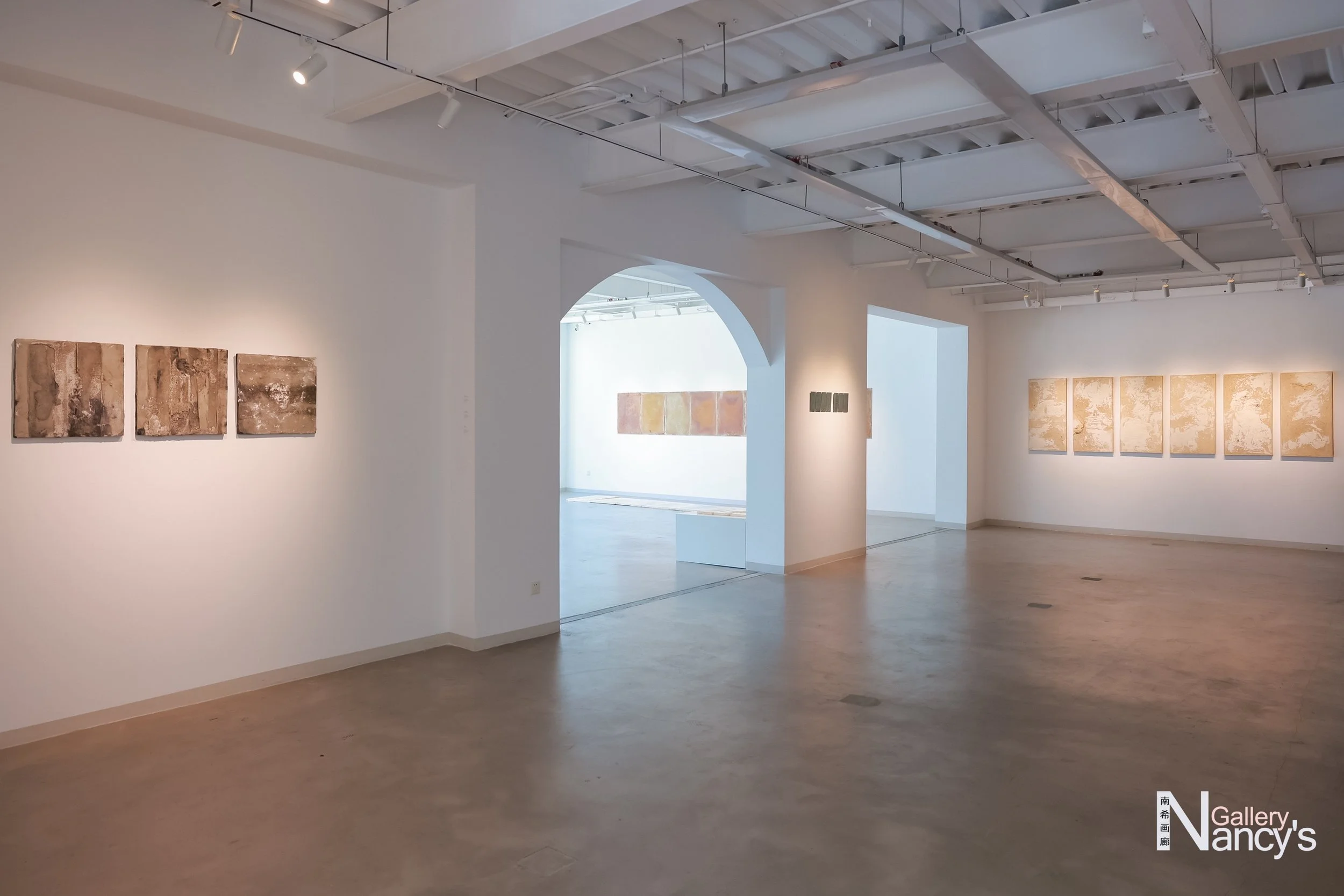
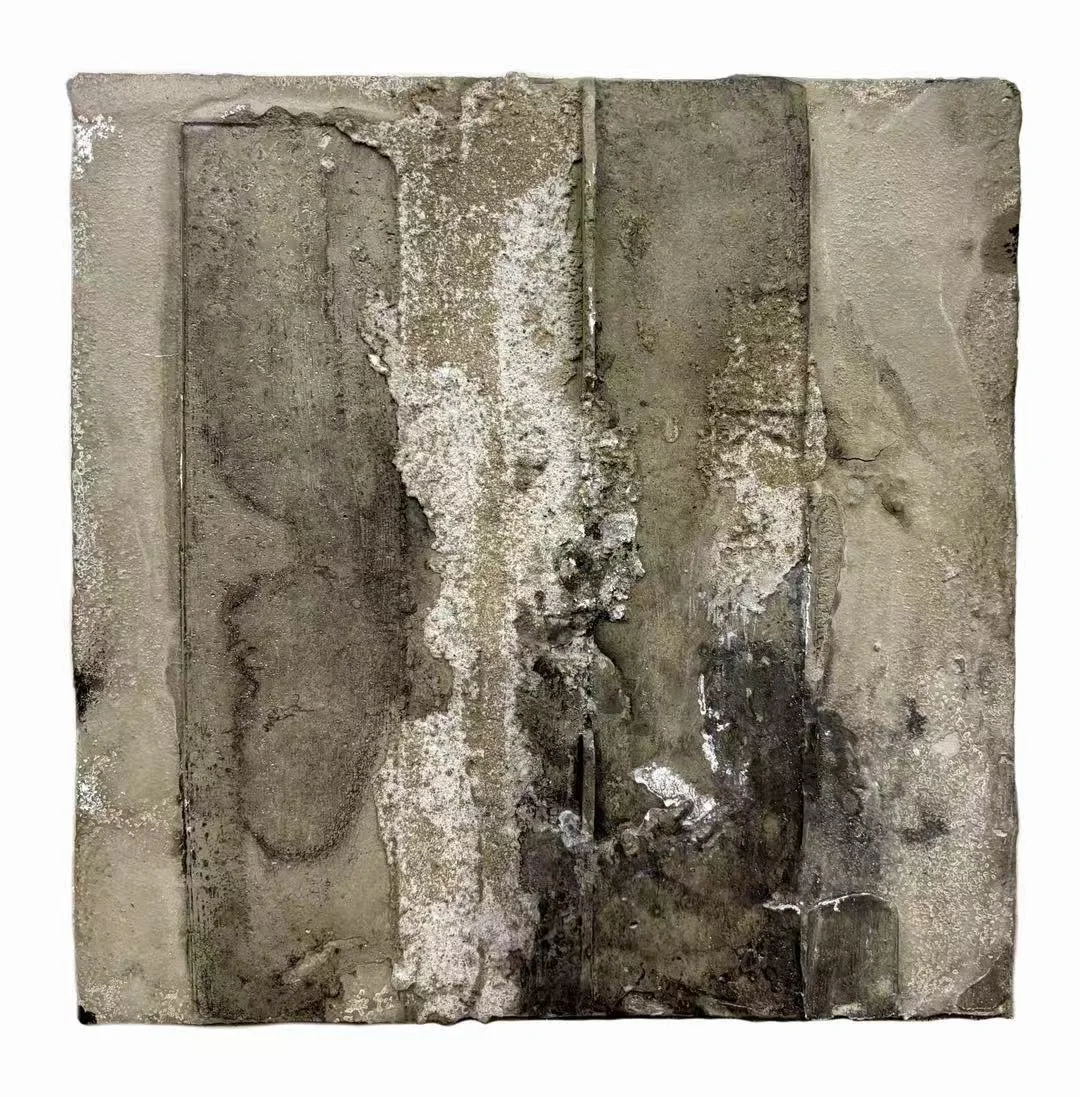
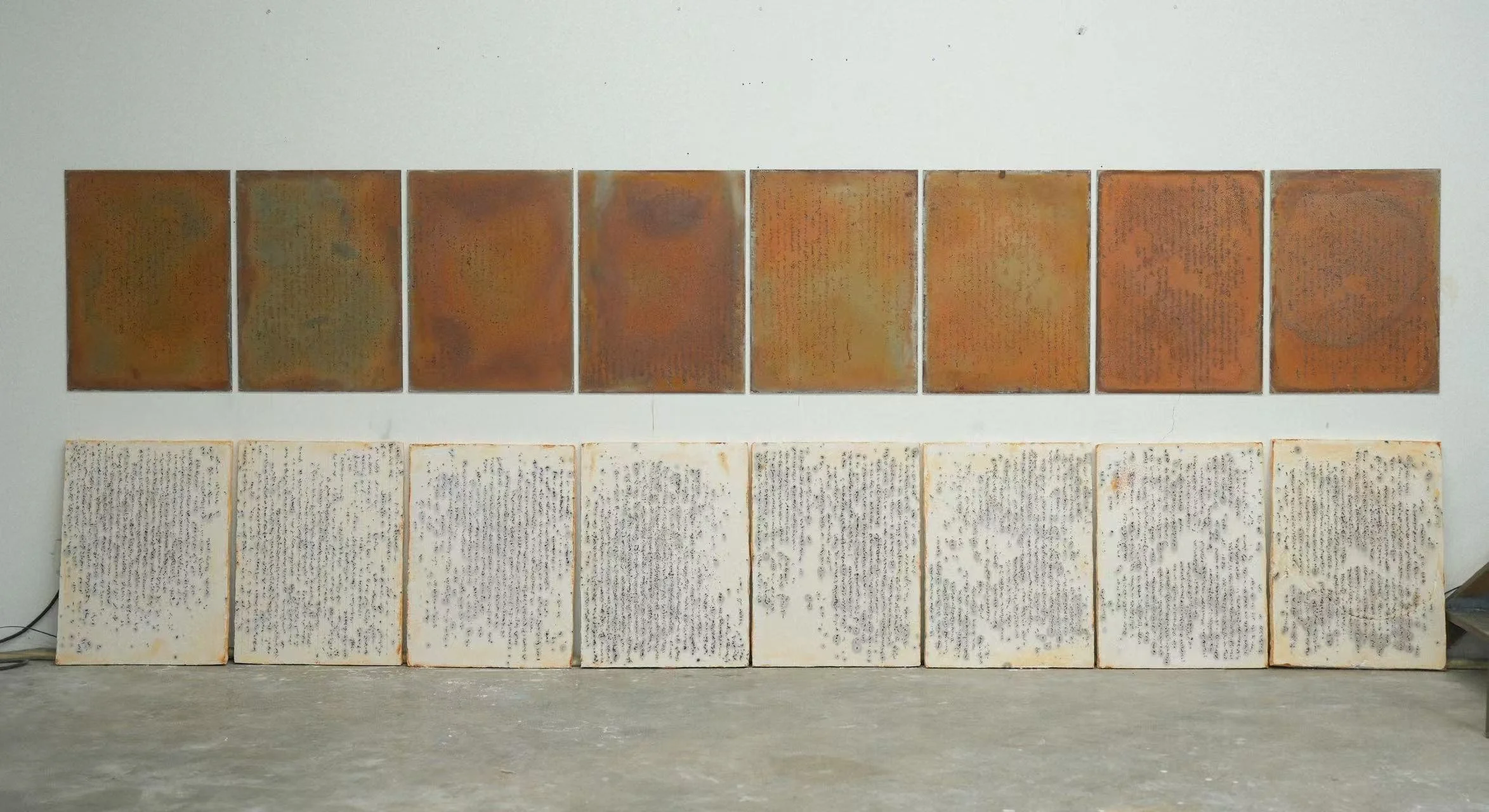
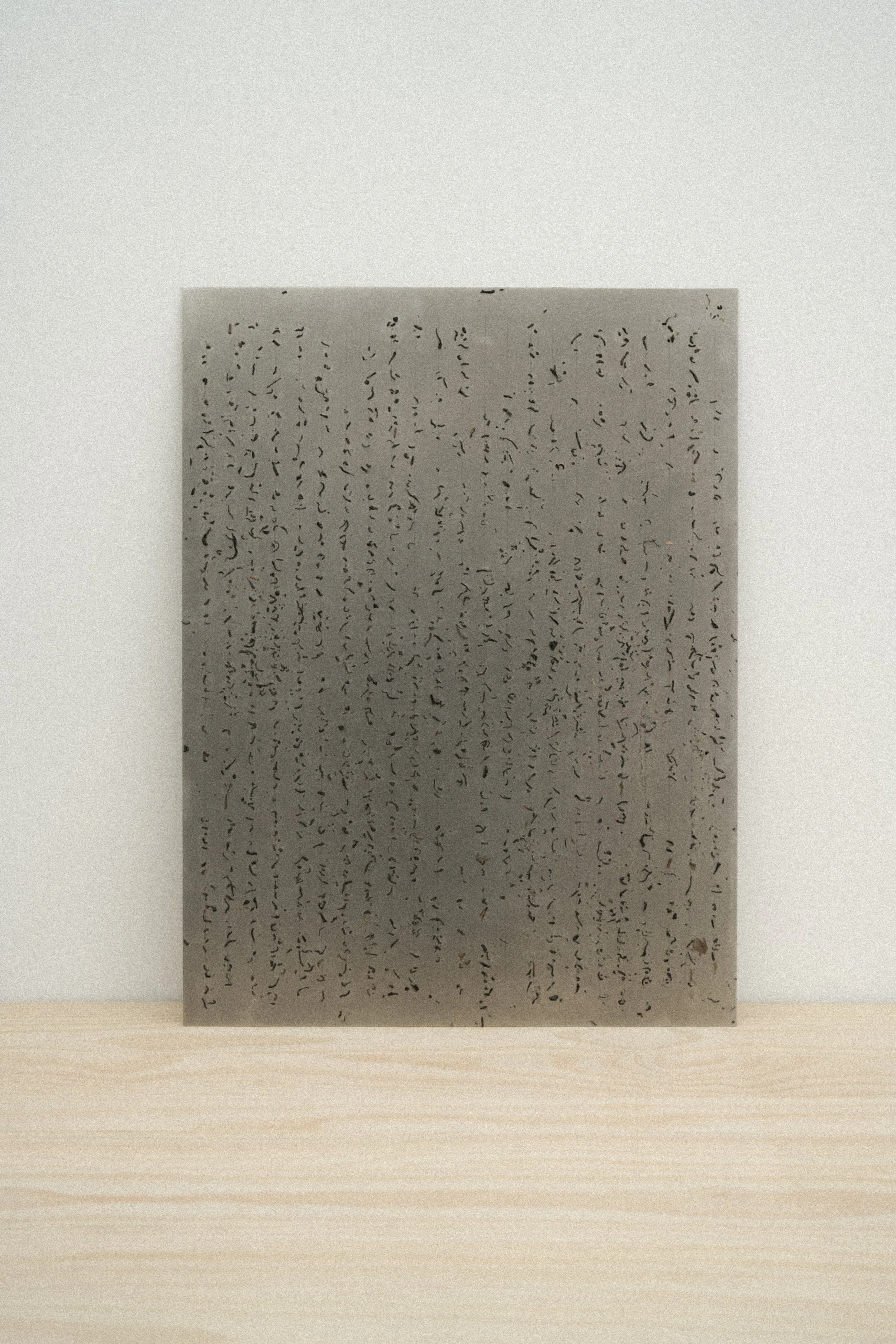
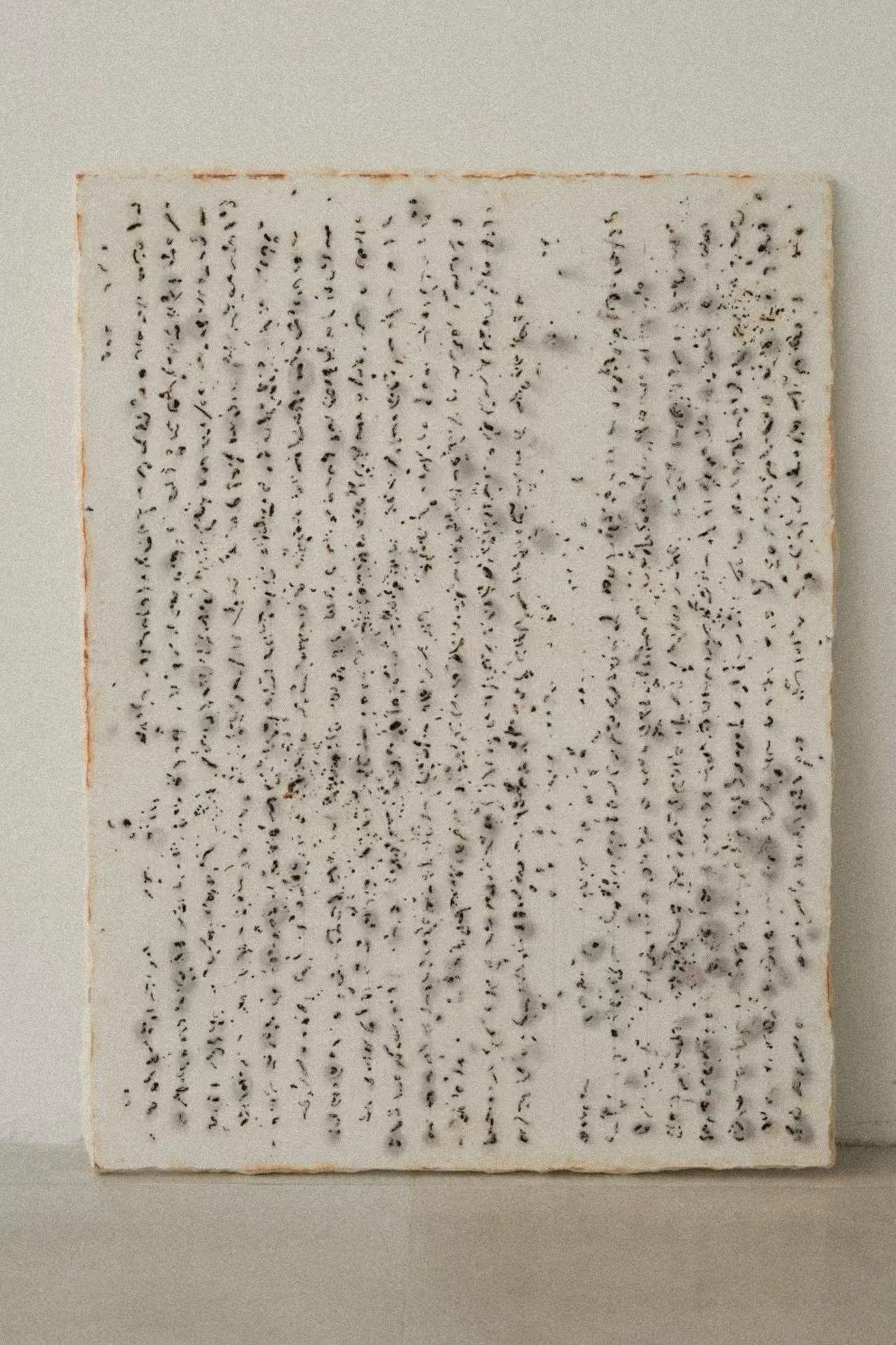
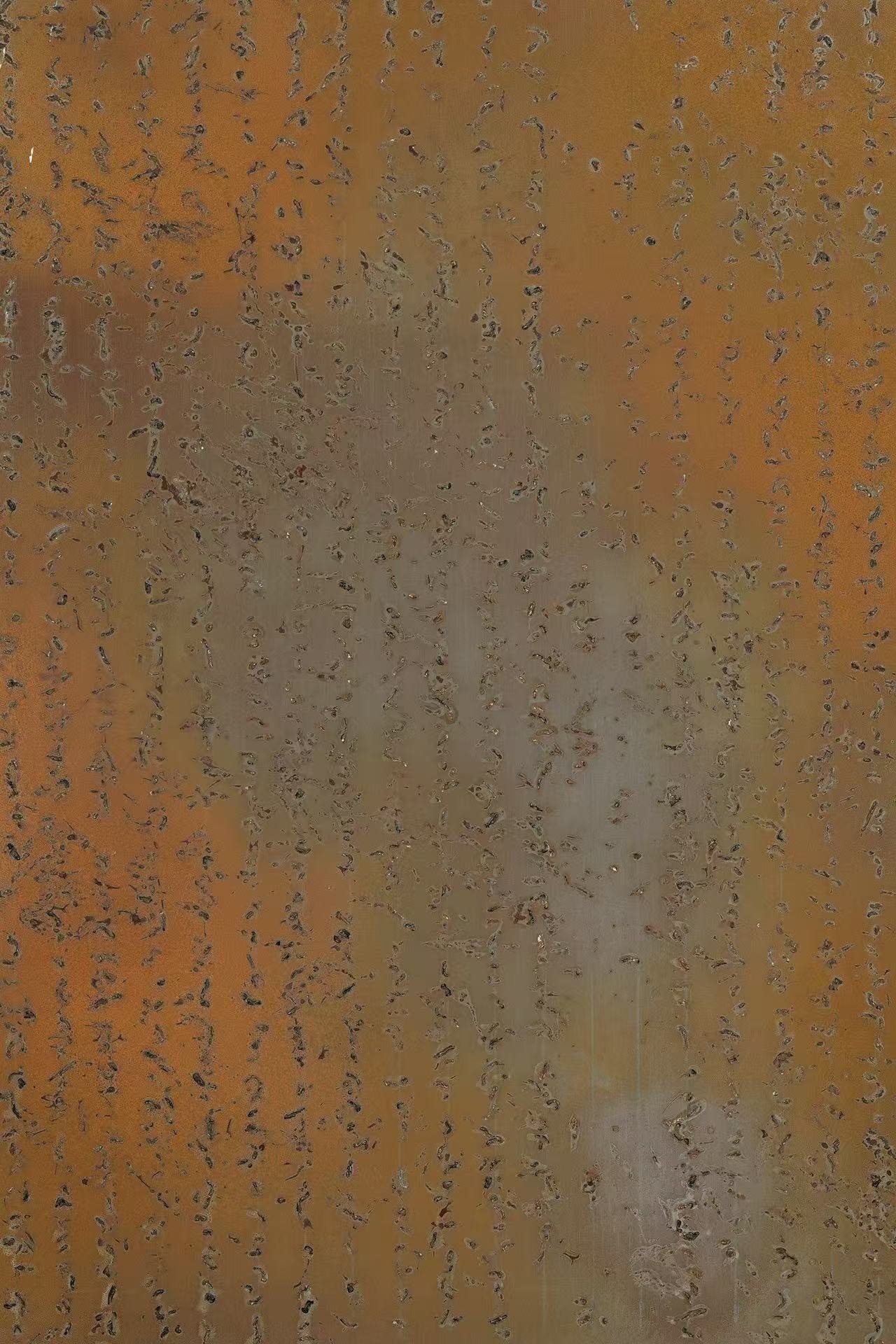
The two artists achieve this common objective through two apparently distant approaches. Linlu Zhang works on “asemic writing,” that is, the production of images whose texture recalls the idea of writing, but in which the signs are not linked to any semantic content, nor do they represent predetermined sounds or phonemes. The works are created on surfaces of various kinds and with different materials, from ink on paper to metal plates, up to tea leaves; sometimes these materials themselves alter and degrade, creating new forms that overlap with the signs. In them, language ceases to be a code, detaches itself from the rules established by convention that force it to reproduce social order, and returns to being a free communication rather than a vector of information flows. On the one hand, one can find a return to a sort of “zero degree” of writing, to the moment when artificial signs and images began to be produced before being assigned a conventional meaning. On the other hand, as the artist herself writes, “In a world constructed by reason, the creativity of human life is instrumentalized and, in this instrumentalization, also nihilized. The usefulness of this project lies in offering us a new perspective to understand the relationship between our existence and the world. It will lead to a deeper reflection on existence, memory, and self-awareness.” Observing them, one retraces the path that led to the birth of language, to the invention of communication.
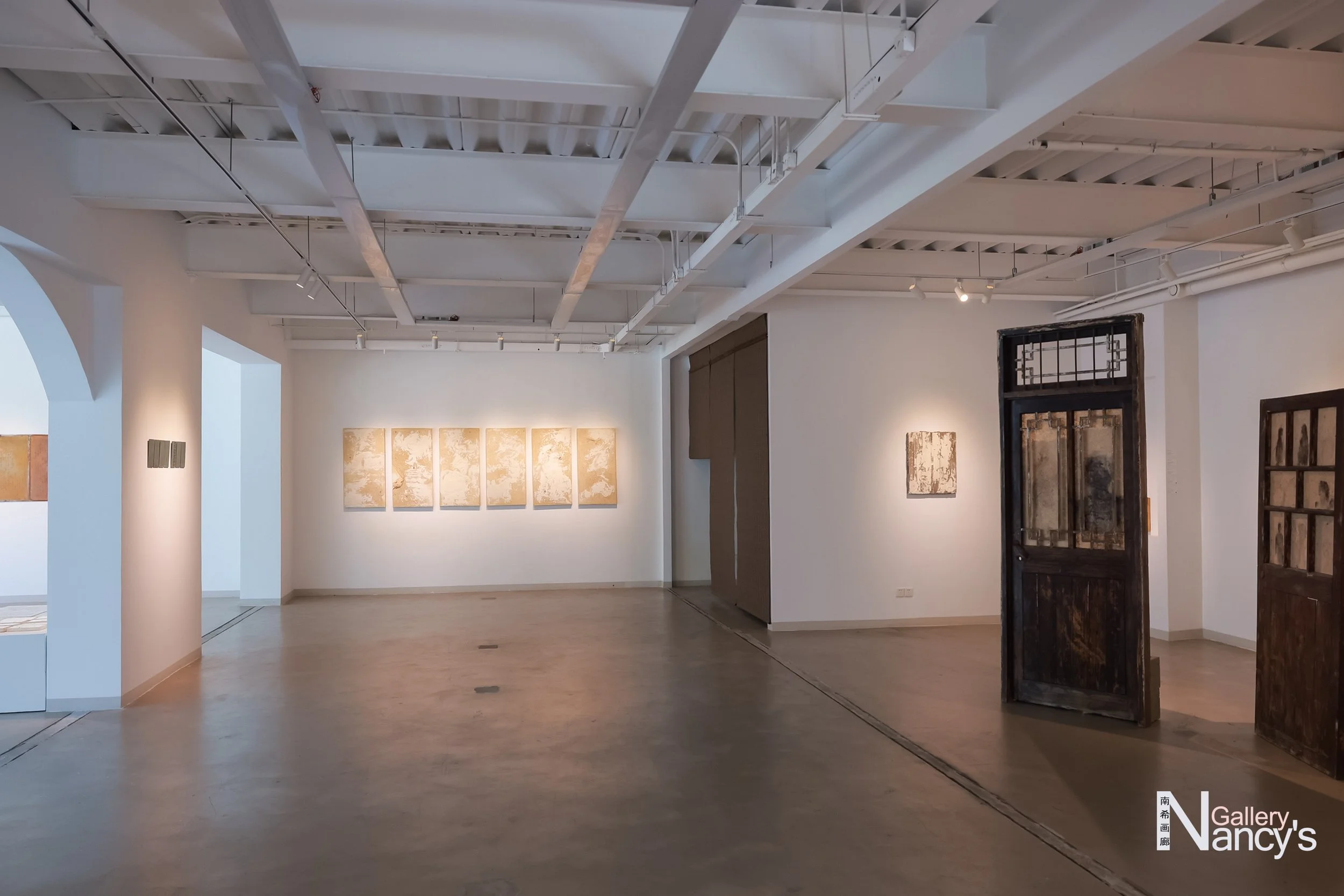
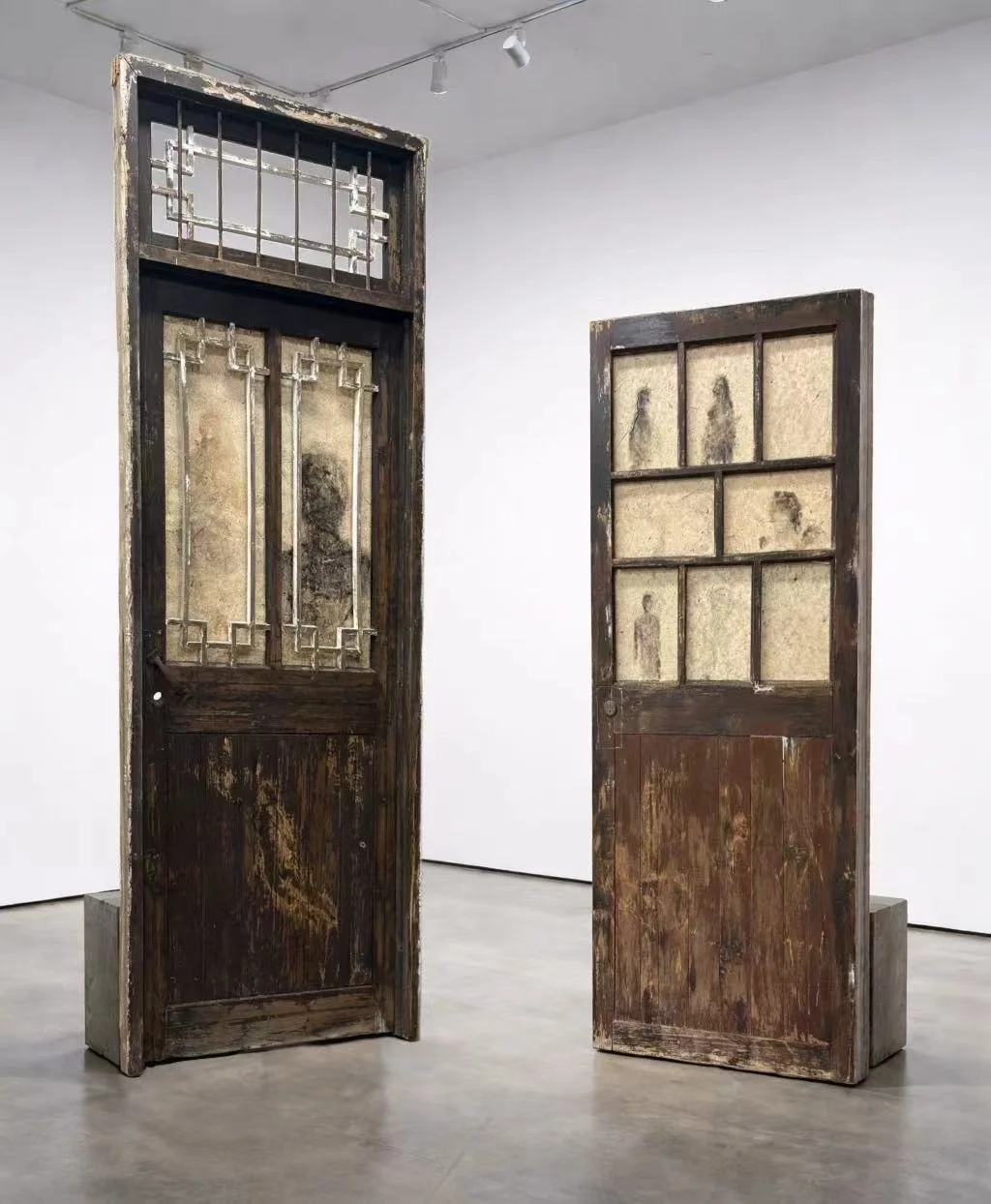
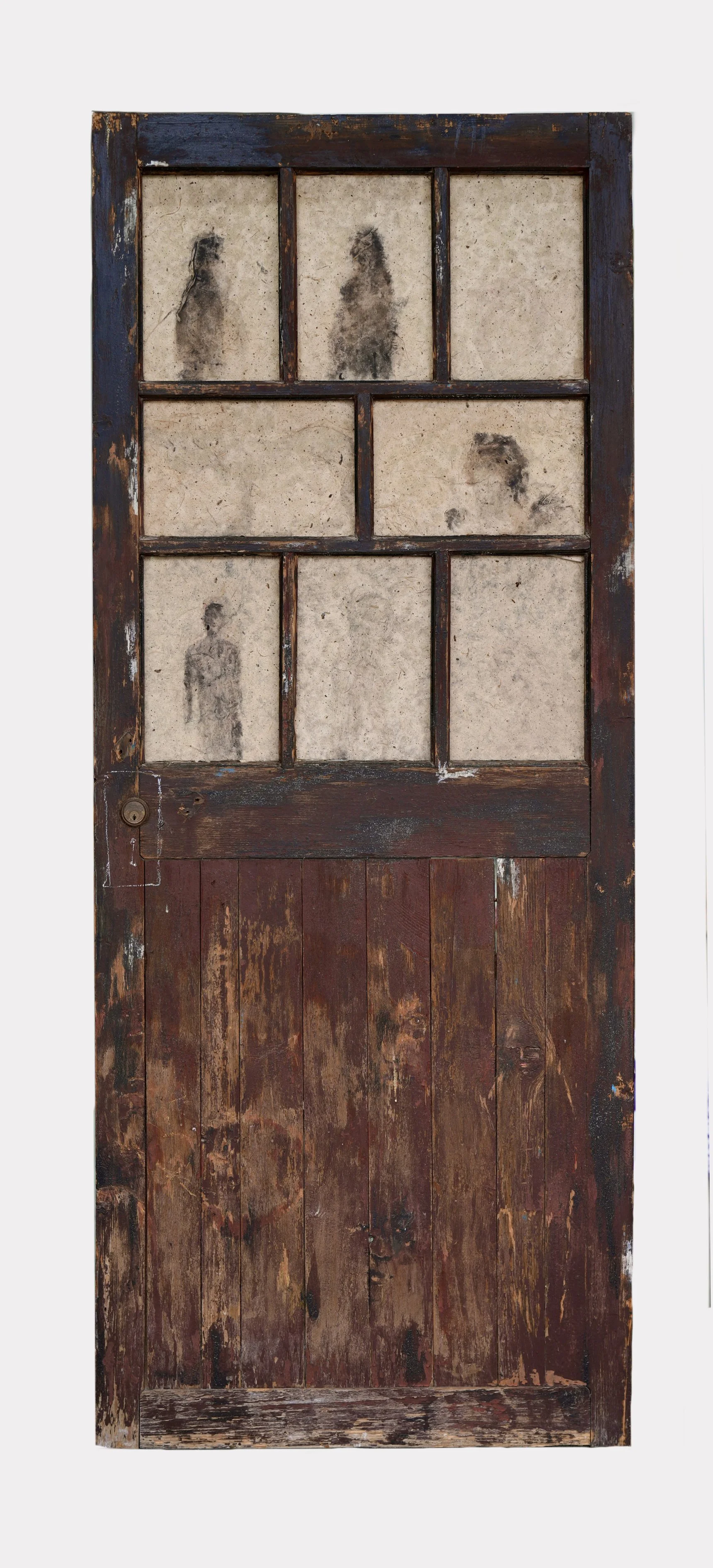
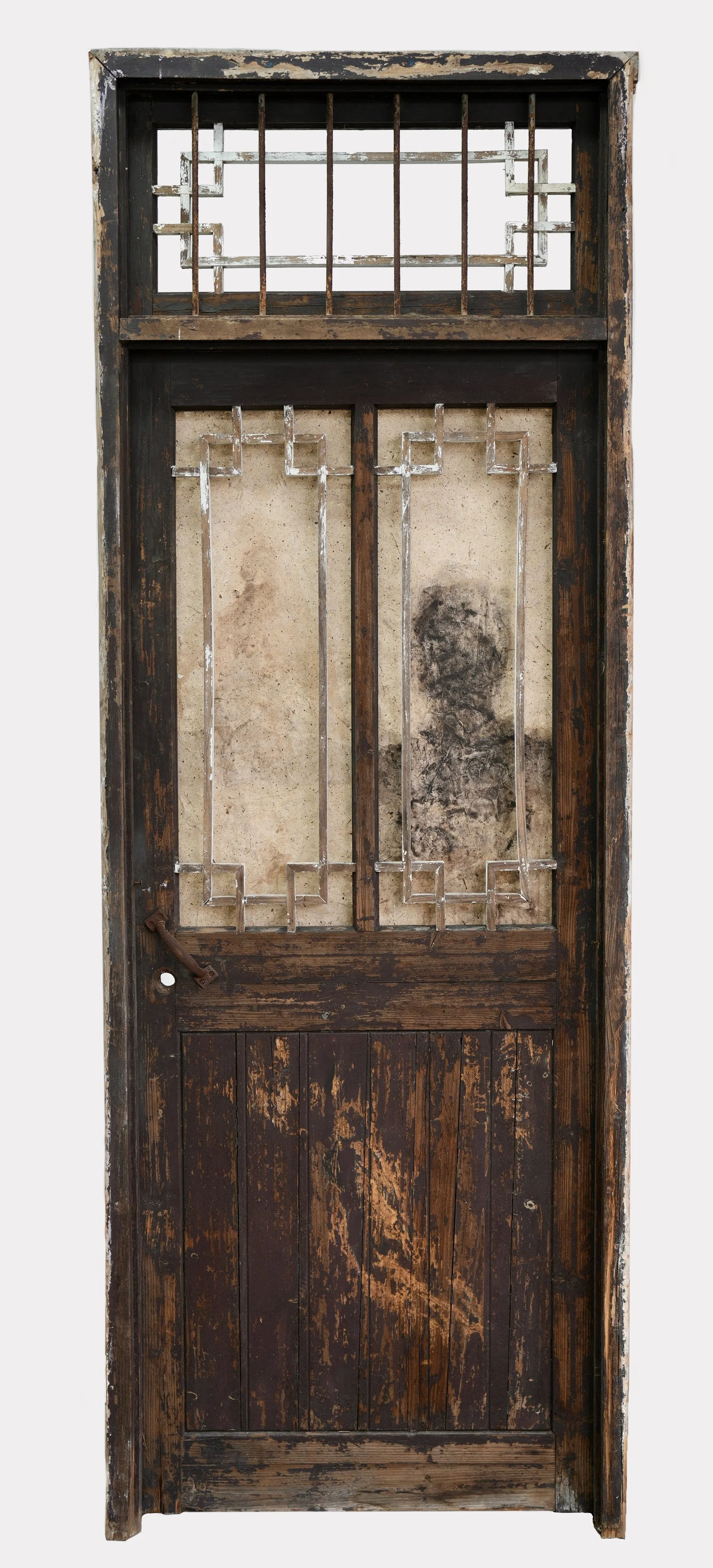
Abrate’s work, on the other hand, is more directly linked to the iconic image and is essentially based on “pareidolia,” that is, the perceptual process that instinctively leads the human brain to elaborate images by tracing random forms back to known objects already encountered through experience. His research originates from his past experience as a street artist, which often led him to intervene on walls or urban contexts of varied and unpredictable nature. He thus creates his works on portions of walls, reconstructed and reduced to panels, or other remnants taken from the urban context, on whose surfaces, by playing with breaks, imperfections, and degradations, he hints at forms and subjects that he leaves to the observer to grasp and reconstruct. From these works two elements emerge. The first is that of time, which leaves cracks and encrustations on the wall as signs of its passing and its decay, as an intermediate phase that preludes destruction.
The operation that the artist inserts into this inexorable flow of time makes use of a second concept, in this case visual—perception—and refers back to the already mentioned pareidolia, through which figures and images emerge from the support, making themselves recognizable to the observer. In this regard, Giorgio Bonomi writes in the text Disvelamenti, drafted for the presentation of the exhibition Hidden Images: “The question is whether the plaster conceals or reveals the image. Indeed, we are faced with a typical dialectical process in which the two horns of the dilemma are equivalent and intimately connected, as happens with other polarities (negative and positive, black and white, beautiful and ugly, etc.): it is up to the sensitivity and perceptual attitude of the observer to determine whether it is one action or the other.”
Without entering into the specifics of the individual works, which have much more to say through their observation than through an external description, it seems important to underline, in conclusion, how in this exhibition one can grasp an important warning regarding certain mechanisms that, almost unconsciously, are spreading exponentially in contemporary society. The mental processes triggered by both artists in fact bring about a reversal of the dynamics that have now become dominant through the use of information technology and Artificial Intelligence, in which the human being renounces from the outset their own perceptual and cognitive elaboration in order to delegate it entirely to the function of the machine.